
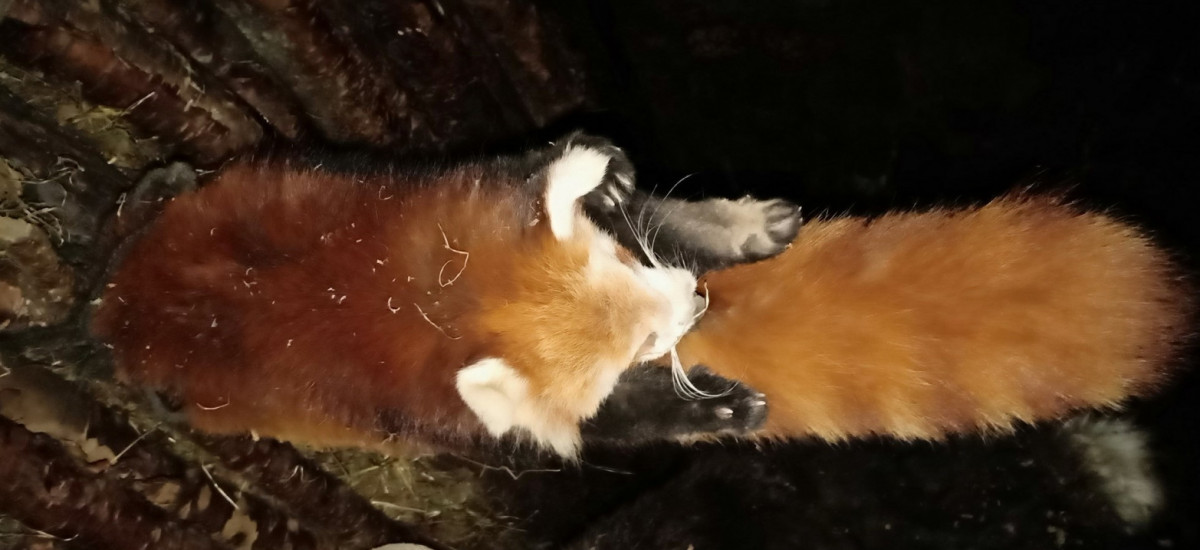
In the month of March, for the first time in the Manaslu Conservation Area (MCA), physical verification of the endangered red panda (Ailurus fulgens) has been confirmed. Following an incident of heavy snowfall, local community member Mingmar Lama from Nile (3361m) came to find a dead red panda in his corral at Fuchyun Kharkha (3600m) which he then photographed and sent to NTNC-MCAP office for verification. Mingmar's corral area is surrounded by forest patch of pine, juniper, birch and bamboo species—very favorable conditions for the red panda.
Although few surveys in the past have already established various sites in the Manaslu Conservation Area (MCA) as being suitable habitats for red pandas—around Rubinala, Lokpa forest area, and other pasture lands—visual sighting was yet to proven. The first red panda physical evidence comes as positive news as it will encourage further scope for research about its habitat and population dynamics, thereby informing measures for conserving these highly elusive species.
Despite its protected status in Nepal, anthropogenic pressures brought about by intensive livestock grazing, manmade forest fires, illegal trade, poaching and habitat loss and degradation are some of the persistent threats to red panda conservation. Its population size in Nepal is estimated to be between 317-582 individuals, and the recent Red Panda Action Plan (2019-2023) of the Government of Nepal is an important initiative to fill the gaps for strengthening the future conditions of this very special species.


